Wednesday, July 28, 2010

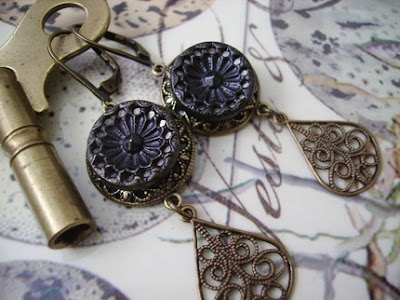
Southern Gothic


Items featured in this post were discovered on Etsy...they are also pieces of my newest treasury. To view the entire collection please visit the treasury, share a comment, shop, share the link elsewhere and do enjoy!

Tuesday, June 8, 2010

Trains


Last Stop

As promised, here's a handful of the shots I captured from the Northwest Railway Museum weekend before last. There is such an atmosphere in and around these retired steel and steam behemoths. A little sadness, a lot of awe, and a quiet grandeur in their dying place.


Load Limit


14


529


Forgotten

The future looks bright
On that train all graphite and glitter
Undersea by rail
Ninety minutes from New York to Paris
Well by seventy-six we'll be A.O.K.

What a glorious world this willl be
What a glorious time to be free...

Song Lyric - "I.G.Y." - Donald Fagan, The Nightfly © 1982

Monday, May 3, 2010

Secret Stairs


I watch PBS--known here in Oregon as OPB. One of my favorites is Oregon Field Guide (Thursdays, 8:30 PM), which covers stories of all things outdoors in Oregon.


The latest episode took me into the Oregon forests, underground in the Oregon Caves, and right here in town to explore the public stairways of Portland.


I was delighted--but not too surprised--to learn that we have 180 public stairways in and around Portland! Back in the early days of our city--pre-automobiles, in the era of the streetcars--Portlander's that lived in our hills (and we have plenty), built the stairways and used them daily to commute to their jobs in the city below.


Today, the stairways are considered hidden gems of our town. Urban hikers love them for a workout. Local historian, Laura Foster, is researching the history of the stairs to write a book. I plan to check that out when it's published later this year.


You can view the stairways portion of the Oregon Field Guide episode at the OPB website.

Images - various photographers on Flickr (not all in Portland).

Monday, November 30, 2009

Neat Things: Globes


Globes definitely qualify as a neat thing! I just listed a vintage beauty in my Etsy shop last night {see photo above, click it to visit the shop}. In researching the age of my globe, I learned a bunch of interesting info on the company it was manufactured by, and thought to myself, "Self, this info would make a rather nifty blog post." I hope you think so, too.


When Luther Replogle quit his job during the Great Depression to make and sell globes, critics thought he’d mapped out a surefire route to failure. But Replogle had more than a novel idea; he had faith in his product.

“Luther came up with the credo that there should be a globe in every home,” says Dan Dillon, 53, co-president of Replogle Globes, the world’s largest globe manufacturer, in Broadview, Ill. (pop. 8,264).


In the late 1920s, Replogle was a salesman for a Chicago company that sold supplies, including globes, to schools. Replogle was convinced that information-hungry Americans would eagerly buy globes for their homes so they could pinpoint places that were in the news.

During the nation’s bleakest economic time, he quit his job, borrowed $500 from friends and family, and founded Replogle Globes in 1930. His wife, Elizabeth, and one employee made the cardboard and plaster globes in their basement and Replogle sold them from his Model T Ford. For three years, sales barely kept food on the table, but Replogle never lost faith in the power of globes to educate and inspire. In 1933, he got his break when he designed an 8-inch souvenir globe for the World’s Fair in Chicago. During the fair, Replogle sold more than 100,000 globes for $1.75 each—and put Replogle Globes on the map.


About the same time, President Franklin D. Roosevelt started his “fireside chats,” a series of radio talks in which he often began his remarks about foreign affairs by telling listeners, “Now, get out your globe.”

Today, 150 Replogle employees manufacture more than 100 models of globes, from 4.3-inch diameter orbs that sell for $9.99 to 32-inch handcrafted, illuminated masterpieces that retail for $8,500. The company sells more than a million globes printed in 20 languages each year, and people still get out their globes to track world events.


You can read more about the Replogle company here and here.

All globe items featured in this post were discovered on Etsy--click the photos for more info and to shop!

Monday, November 16, 2009

Jazz: The Thinking Man's Music


Jazz has a history, which makes it stand head and shoulders above all other genres of music. Jazz is a musical conversation: a partly planned and partly spontaneous musical dialogue among the musicians who perform it. The history of jazz is a fascinating story that can be interesting and enjoyable to fans and non-fans alike. It is a story of not just music and musicians, but of the struggles, it took to achieve, to create, to invent and re-invent, and to make sacrifices for the sake of an art. It is a look at how 20th century Americans forged a very personal and unique art form that defined the culture in which they lived.


Robert Leroy Johnson

Jazz is a true American art form. It is as much a part of our cultural heritage as baseball and our Constitution. Risk takers and rule breakers, men and women who put everything on the line for the sake of their art, created it, like America itself. Jazz is the art form of individual expression, but unlike many other mediums, it is spontaneous; what is created now will be recreated differently later. Jazz is a perfect example of the American spirit and a reflection of our changing culture. Jazz is the epitome of twentieth century America.


Glenn Miller Swing Band

As far as music goes, Jazz is relatively complex. Many musical, technical, intellectual, and emotional elements happen simultaneously. Jazz makes far more demands on the listener than most popular styles of music which are fundamentally simpler than Jazz. The more you know about Jazz (how to listen to it, the history and evolution of its styles, the key players, the different forms, its relationship to American history and its cultural significance), the more you can appreciate and enjoy it. Listening to Jazz even makes it possible to gain insight into humanity via an aesthetic experience. This is the ultimate goal of Jazz.


Dave Brubeck Quartet

Jazz was created out of the social conditions that were present in the South due to the institution of slavery. The roots of Jazz can be traced to the beginnings of African and Western European music. Jazz today can be difficult to define because it is performed in so many styles and many other types of music including but not limited to Rock and Roll, Pop, Funk, World Music, Fusion, Latin Jazz, Smooth Jazz, Avant-Garde, and Rhythm and Blues have all been influenced by its sound.


John Birks "Dizzy" Gillespie

Slaves brought work songs and field hollers learned in Africa to America in the early 1600s. Those forms of music were eventually adapted and then modified by religious blacks and became spirituals--the earliest versions of gospel music. What we know as early Jazz was birthed around 1895 in New Orleans from the styles known as Creole and Dixieland. Ragtime music became the rage in the late nineteenth and earliest part of the twentieth century.


Fats Waller

The standard history of Jazz generally considers the first Jazz record to have been the Original Dixieland 'Jass' Band's (a group of all white musicians) "Dixie Jass Band One Step" and "Livery Stable Blues." This record was made for the Victor label in New York on February 26, 1917. The record was released in May of 1917. It was an immediate success and this record is considered the spark that ignited the Jazz fad that seized the world in the years during and after World War I.


George Gershwin

In a decade of rebellion, the Roaring 20's was the perfect climate for Jazz. The young and the hip craved anything that was new and exciting. The more uptight members of society thought Jazz was decadent and amoral which gave Jazz an extra appeal to the younger generation. The exciting new rhythms and harmonies were ultimately the irresistible force behind society's eventual acceptance of Jazz. The first bandleader to achieve national notoriety was Fletcher Henderson who formed a band in the early 1920's. Originally, his band was a dance band, playing waltzes and foxtrots. Over the course of a few years, Jazz rhythms and blue notes became more and more prominent in the band's music. By the time the band took over at Roseland Ballroom and featured Louis Armstrong on trumpet, it had become a Jazz band.


Louis Armstrong

Most of New York's Jazz clubs were in Harlem, and in 1925-26, there appeared several popular plays and a book, which portrayed Harlem as the exciting place to be in New York City. As a result, tourists gravitated toward Harlem to see this colorful neighborhood, and the nightlife took off. From 1927 until the late 1930’s, things were so busy in Harlem that good musicians could play every night of the year, sometimes in many different bands, due to constant personnel changes in most of them.


John Coltrane

It wasn't until 1935 that Jazz with a new "Swing beat" achieved national attention thanks in large part to Benny Goodman. With the help of a flourishing radio broadcast industry Big Band Swing music was in full flower and it was shortly after that jitterbug dancing—created specifically for this style of music--also gained national popularity and bolstered American optimism throughout the era of World War II.


Duke Ellington Big Band

In the late 1940s the exploratory use of unusual instruments, the use of new techniques without sacrificing a swinging feel and a modern use of carefully written ensemble arrangements by Miles Davis, Gerry Mulligan, Gil Evans and John Lewis had far reaching effects on Jazz. Their recordings—the most well known being, "Birth of the Cool”--represented the maturing of Cool Jazz, demonstrated the wide potential of this style and established it as a permanent voice in the Jazz genre.


Miles Davis, Billie Holiday

From 1940-1955 a new style emerged called Bebop and it created yet another evolution in the sound of Jazz. Young black musicians broke free of the mostly white- member big bands in seek of better pay and the creative freedom to play new music they were creating. The size of the groups became smaller, the arrangements had more room for individual players to improvise, the tempos were purposely undanceable—either very fast or very slow—and their sound was positive and joyful but very unpredictable. Key players from the Bebop era include trumpet player Dizzy Gillespie, sax man Charlie Parker (aka “Bird”), and piano master Thelonious Monk.


Thelonious Monk

The 1960s through 1990s brought the styles of Free Jazz, Jazz/Rock Fusion, Smooth Jazz, World Music, Latin Jazz, Avant-Garde, Acid, Urban and Neo-Traditional styles of Jazz. These periods continued to reshape and remake what Jazz was and is today and carried the influence of Jazz into all other genres of music in America and throughout the world.


Pat Metheny

In each decade there are those who have said, “Jazz is dead”. While this is obviously not true, it is true that our society has become more diverse, and so has Jazz. Jazz gathers influences from new technology, different cultures and new ideas. It was originally created from a fusion of musical styles and is still recreating itself from new musical styles. That is why it will continue as part of our heritage, keep pace with the rest of the music genres, and hold its place at the front of the best in music.


Tina M. Pfeiffer, Evaluative Essay, 11.21.07
© Tina Pfeiffer, 2007 ~ do not use this writing in whole or part without my written permission...thanks!

Thursday, May 28, 2009

Travel List: Eureka, Nevada


eureka opera house

I've mentioned it a few times...we love to travel.  Some of our best trips have been not too far from home, and many are based upon exploring historical places.  Ghost-towns are a favorite for us and especially nice if there are surviving structures to photograph!


eureka hotel


newspaper office


eureka, nevada courthouse

A mid-19th century lead and silver mining center, Eureka is one of Nevada's best-preserved mining camps with dozen of historical sites.  The Eureka Opera House was built in 1880 and is now used as a convention center and cultural art center.  The original Eureka Courthouse, built in 1879, is still in use, and the Eureka Sentinel Museum and local cemeteries are both points of tourist interest.


eureka historical museum

We haven't explored Nevada yet but this town is one we're putting on our Travel List!

More info about Nevada, Eureka and the Pony Express area of Nevada.

Images from Pony Express Nevada website, 2009.

Wednesday, February 11, 2009

My Backyard: Portland Chinese Classical Garden

Our photography class has voted and the results are in. This Saturday we will visit the Portland Chinese Classical Garden and shoot our memory chips up to their pixels content!


Moon Locking Pavilion

History of Scholar’s Gardens
The city of Suzhou is located approximately 50 miles west of Shanghai on the eastern coast of China. It was founded in 525 BC and is one of China’s oldest cities. It has a mild climate, similar to Portland’s. By 1,000 AD, it had become a thriving city with an economy based on trade. It was also a place for government officials to retire. These retiring Imperial court officials built housing compounds that featured beautiful gardens. These gardens attempted to duplicate nature found in traditional Chinese landscape paintings, and the nature of the nearby Yellow Mountains. The gardens would be used to entertain guests and undertake intellectual pursuits such as painting, poetry, and conversation. Our Garden is based on a garden built in Suzhou during the Ming Dynasty (1368-1644 AD).


Pagodas on Zither Lake

Construction
The Garden was built on land donated by Northwest Natural [Gas] who had for 20 years used it as a parking lot. The groundbreaking ceremony was held in July 1999, and construction was completed in September 2000. The majority of the materials used in the construction of the Garden originated in China. Approximately 65 workmen from Suzhou created the structures and completed the work. An American construction company did the site preparation and foundation work. The Garden is in compliance with all current U.S. construction codes, and was completed at a total cost of approximately $12.8 million.


View of Zen and Leak Window

Plants
The majority of the plants in the Garden are indigenous to China; however, they were grown in the United States. Current import bans prevent plants from being brought directly from China. Prior to these recent bans, plants were brought from China to the U.S. and their offspring are what you will see today. Some plants are more than 100 years old and were transplanted from gardens and nurseries in Oregon.

Culture of Tea
Located inside the Garden’s Tower of Cosmic Reflections is the Tao of Tea, a local tea company promoting the art and culture of tea. The earliest book on tea was written by Lu Yu between 760 CE and 780 CE (Tang Dynasty). In China, tea is a social process, a custom which involves not just the herbal or medicinal values of tea but social engagement. Guests are always served tea, no matter the time of day. Accompanying the tea are small dishes to enhance the tea and stimulate conversation among friends or guests.


Tea House and Wares

Photos displayed in this post are from a previous visit to the Garden, and are available for purchase as prints (various sizes) or blank note cards. Visit my Etsy shop or contact me for details and pricing...thanks!

Photos copyright pfeiffer photos 2008 - all rights reserved.

Text about PCCG - copyright Portland Chinese Classical Garden website, 2008.

Friday, February 6, 2009

Playing with Photoshop: Digital Daguerreotypes

My first project for Digital Photo class is due tomorrow. We researched the history of Daguerreotype photography, had a crash lesson in basic Photoshop CS4 (2.5 hours), and were then presented the mission of manipulating a 21st century digital photo into a 19Th century Daguerreotype. I present my first true foray into Photoshop for your viewing pleasure.


Rides from the Past - BEFORE


Rides from the Past - AFTER

Click on the pics to enlarge. I am hoping for an "A"...wish me luck!


Image displayed is copyright pfeiffer photos 2008 - all rights reserved.

Saturday, November 8, 2008

Where the Columbia flows into the Pacific

Astoria is a nationally significant historic city at the western end of the Lewis & Clark Trail. Astoria is the oldest American settlement west of the Rockies; a place that takes visitors back to simpler times, its architecture dominated by hundreds of Victorian homes clinging to steep wooded hillsides and with a revitalized 1920s era downtown; all set against a backdrop of tremendous natural beauty in the temperate rain forest at the mouth of the Columbia River.


t 2 b: Astoria Theatre Detail by Tina of Pfeiffer Photos, Waterfront Trolley courtesy of airstreamlife.com/wordpress, Columbia Barge by Chris, Flavel House Museum courtesy of oldoregon.com

Visitors have an opportunity to escape into an appealing, intriguing past. Unspoiled and generally uncrowded, Astoria and nearby Warrenton have several first-class interpretive attractions including Fort Clatsop, the Columbia River Maritime Museum, the Flavel House, Fort Stevens State Park, the Astoria Riverfront Trolley and the Astoria Column. The area has an extraordinary sense of place and a feeling of history. [1]

Astoria has hosted the filming of a number of movies over the years including, Kindergarten Cop, Free Willy, Teenage Mutant Ninja Turtles III, The Ring 2 and the most famous and beloved, The Goonies!


t 2 b: The Goondocks by Chris, The Goonies House courtesy of gosleepgo.com


A visit to Astoria for us means a stop for lunch at T. Paul's Urban Cafe. They describe their menu as Fresh-Eclectic Northwest Cuisine and we describe it as very tasty indeed. The atmosphere is casual, complete with a dimly lit coffee lounge in the rear. Overstuffed sofas surround a coffee table full of art and local magazines. A large saltwater aquarium glows in the corner. T. Paul's hosts live music on Friday and Saturday nights: blues, jazz or folk.


l 2 r: T. Paul's Urban Cafe by Tina

On our recent visit hiked the nearby 1.5 mile trail to view the Cathedral Tree, a 300-year-old spruce tree with a unique opening at the base.


Cathedral Tree by Tina

From the Cathedreal Tree the trail climbs to a wooded park towering above Astoria on Coxcomb Hill, Oregon’s highest hill. At the top the Astoria Column presents a spectacular view of the city and surrounding rivers, bay, forest, mountains and Pacific Ocean. The Astoria Column commemorates the westward move of discovery and migration. Built in 1926, it is 125 feet high and has 164 steps winding to the top.


t 2 b: Astoria-Megler Bridge and by the Astoria Column by Chris

Sometimes I think to myself that it would be nice to move to a smaller city with plenty of history, find an old house to live in and restore with my hubby and our two cats. Space to create, write, go outside, experience nature daily and steep in the quietness at night. A community that moves a bit slower, makes more personal connections with the people around us. Sometimes I just think this and that maybe, someday, it might be Astoria.


photos copyright of photographers as labeled.

[1] http://www.oldoregon.com

text [except as noted], copyright pfeiffer photos 2008